How to Fix Root Rot Using Wesol Food Grade Hydrogen Peroxide 7.6%
How to Fix Root Rot Using Wesol Food Grade Hydrogen Peroxide 7.6%
Root rot can be difficult to spot because it often starts where you cannot see it — beneath the soil.
A plant may look healthy for a while, even as its roots are becoming damaged. By the time yellow leaves, wilting, or slowed growth become noticeable, part of the root system may already be affected.
The good news is that early action can give a plant a better chance of recovery. Treating root rot is not simply about removing damaged roots. The growing conditions around the remaining roots need to be corrected too.
Understanding Root Rot
Healthy roots need both water and oxygen. When the growing medium remains wet for too long, the spaces between soil particles become filled with water and the amount of oxygen available around the roots decreases.
Over time, this can leave roots stressed and increasingly vulnerable to decay. Certain soil-borne microorganisms can also become more problematic under these conditions, including organisms associated with root and crown diseases such as Pythium, Fusarium, and Phytophthora.
As the root system becomes damaged, the plant can lose its ability to absorb water and nutrients efficiently. This is why a plant with root rot can sometimes look thirsty even when the soil around it is still wet.

How to Recognize Root Rot
Root rot does not always look the same. Symptoms can vary depending on the plant, the severity of the damage, and the condition of the growing medium.
One of the first things you may notice is a change in the leaves. Lower leaves can turn yellow or brown and may eventually drop. New growth may also become smaller, weaker, or slower than usual.
Wilting is another warning sign. If a plant continues to wilt even though its growing medium remains consistently moist, the root system may not be functioning properly.
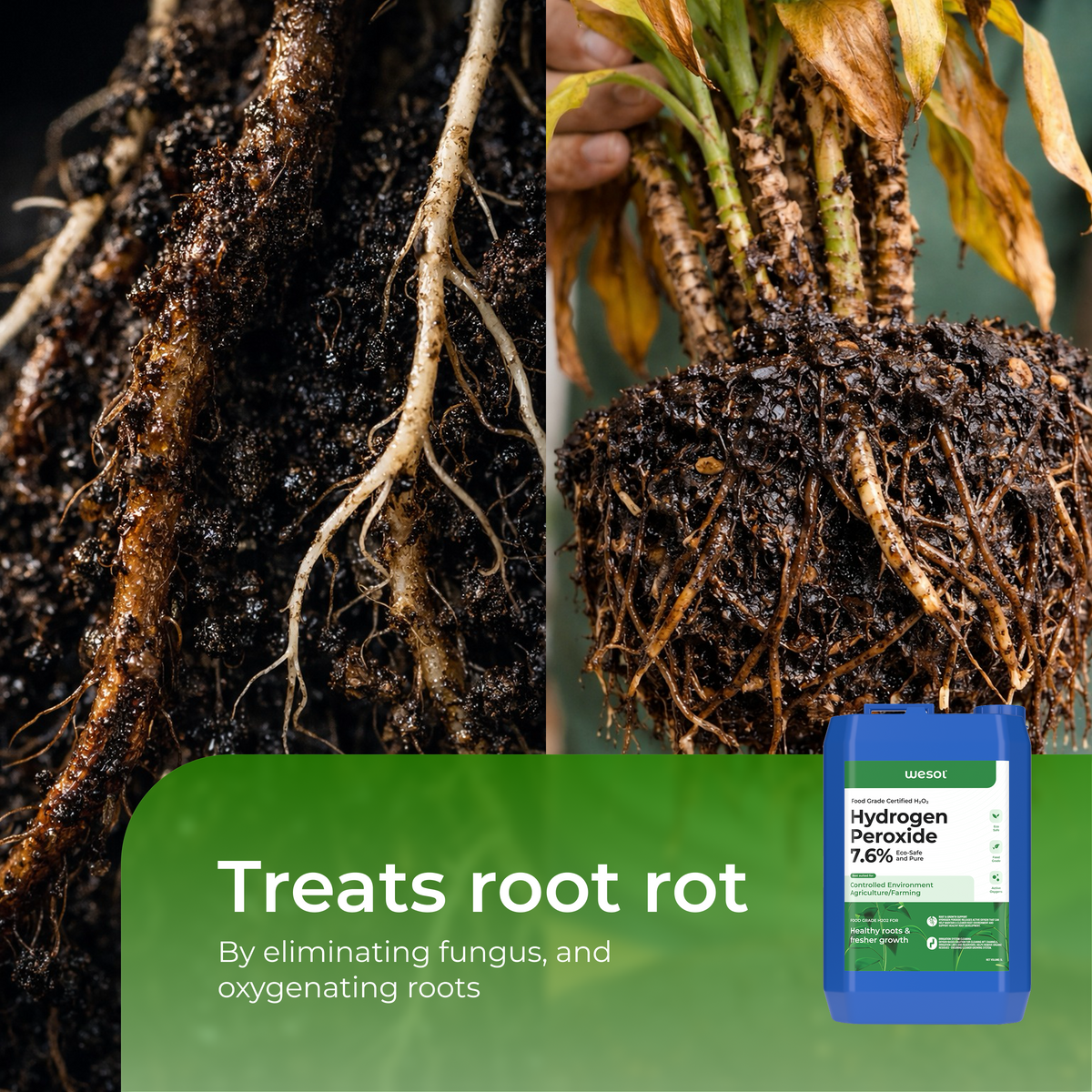
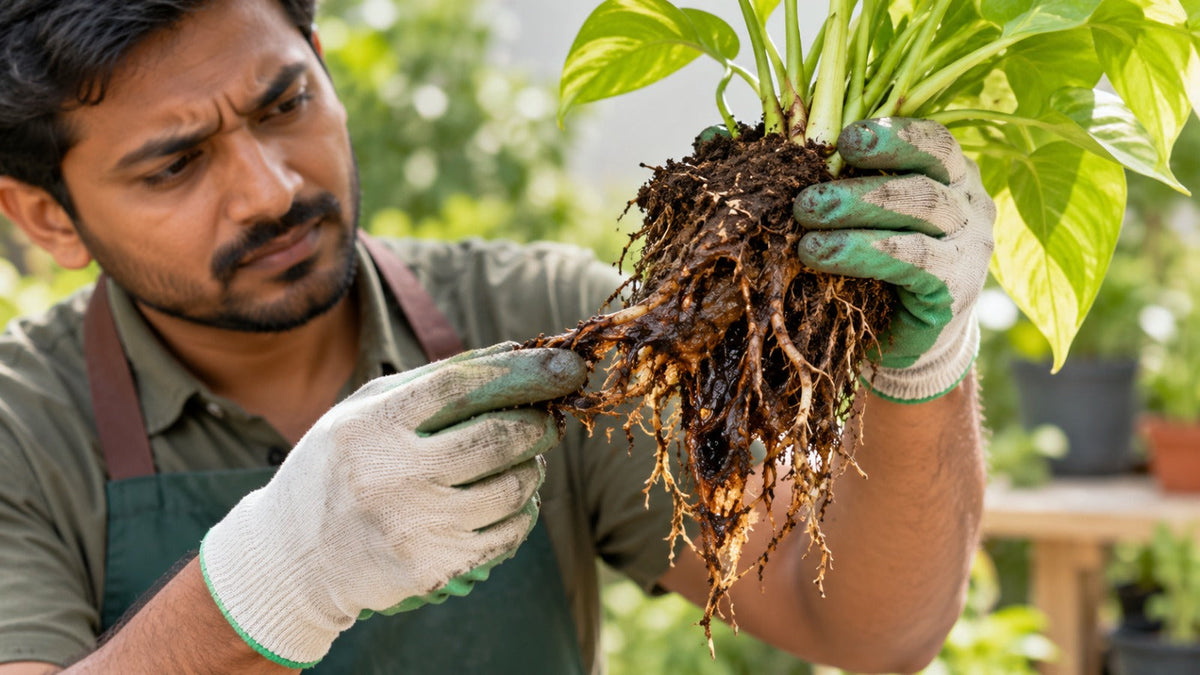
The most reliable way to investigate suspected root rot is to look at the roots themselves. Healthy roots are generally firm and structurally intact, although their natural colour can differ between plant species.
Brown or black roots that feel soft, mushy, or slimy rather than firm can indicate serious root damage. A sour, stagnant, or sewage-like smell coming from persistently wet growing medium can also be a warning sign.
Why Does Root Rot Happen?
Root rot is usually connected to the conditions surrounding the roots rather than one single cause.
Watering too frequently is one of the most common contributors. When the growing medium stays saturated, there is less air available around the roots.
Poor drainage can make the problem worse. Even when watering is not excessive, a container that cannot release excess water may leave the root zone wet for too long.
Dense or compacted growing media can create a similar problem. Water moves slowly through the medium and air movement around the roots becomes restricted.
Warm, wet, poorly aerated conditions can also create favourable conditions for microorganisms associated with root diseases.
Root rot management begins with the root-zone environment. Removing damaged roots without correcting the conditions that caused the problem may allow the problem to return.
How to Treat Root Rot
Once root rot is suspected, the first priority is to inspect the root system and remove tissue that is clearly dead or severely damaged. From there, the plant can be moved into a healthier growing environment.
Remove the Plant
Carefully take the plant out of its existing growing medium. Gently loosen the medium around the roots and avoid pulling or tearing the root system.
Inspect the Roots
Examine the root system closely. Separate healthy, structurally sound roots from roots that are clearly dead, soft, or severely decayed.
Remove Damaged Roots
Remove roots that are soft, mushy, or visibly decomposing using clean, disinfected scissors or pruning shears. Keep healthy roots wherever possible.
Prepare the Solution
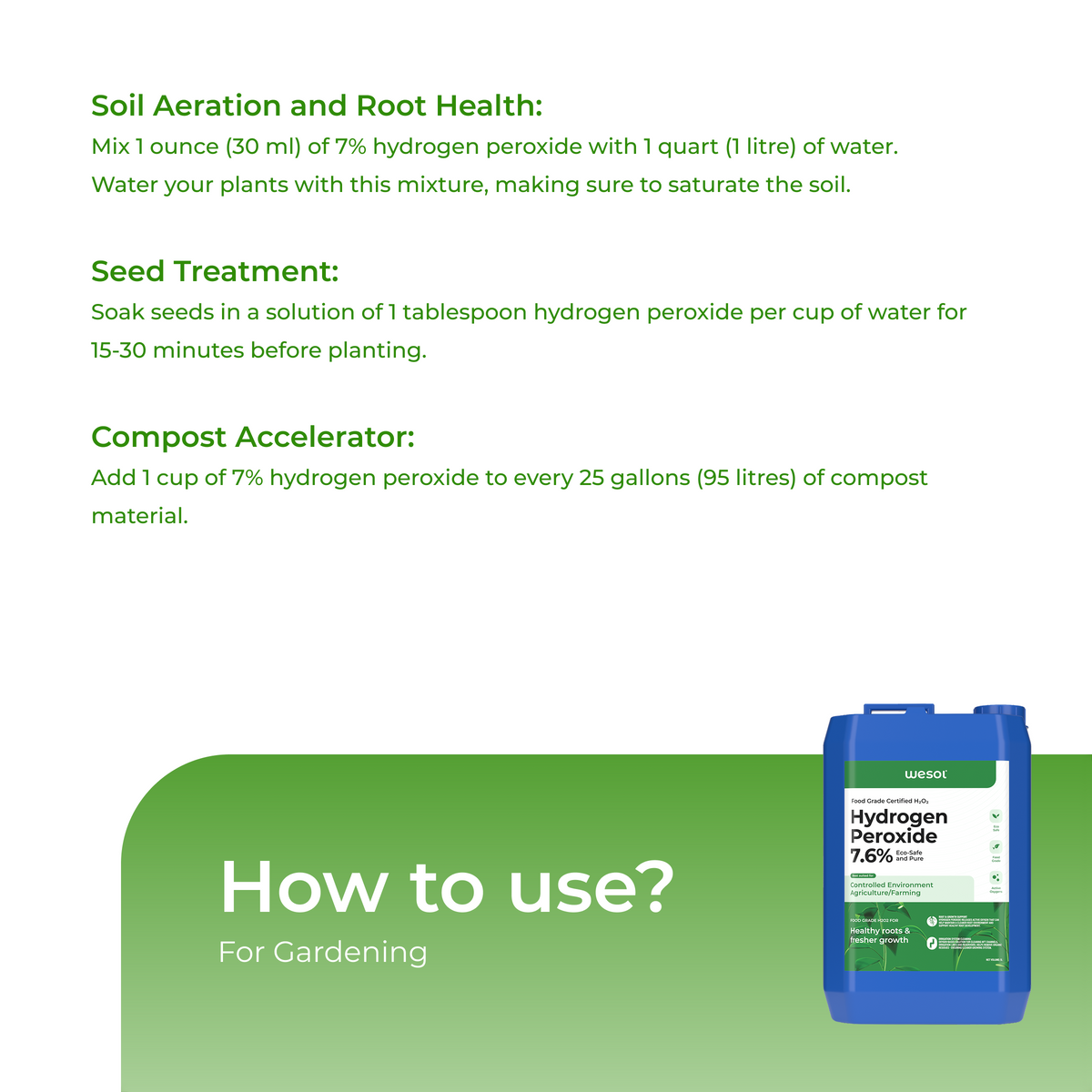
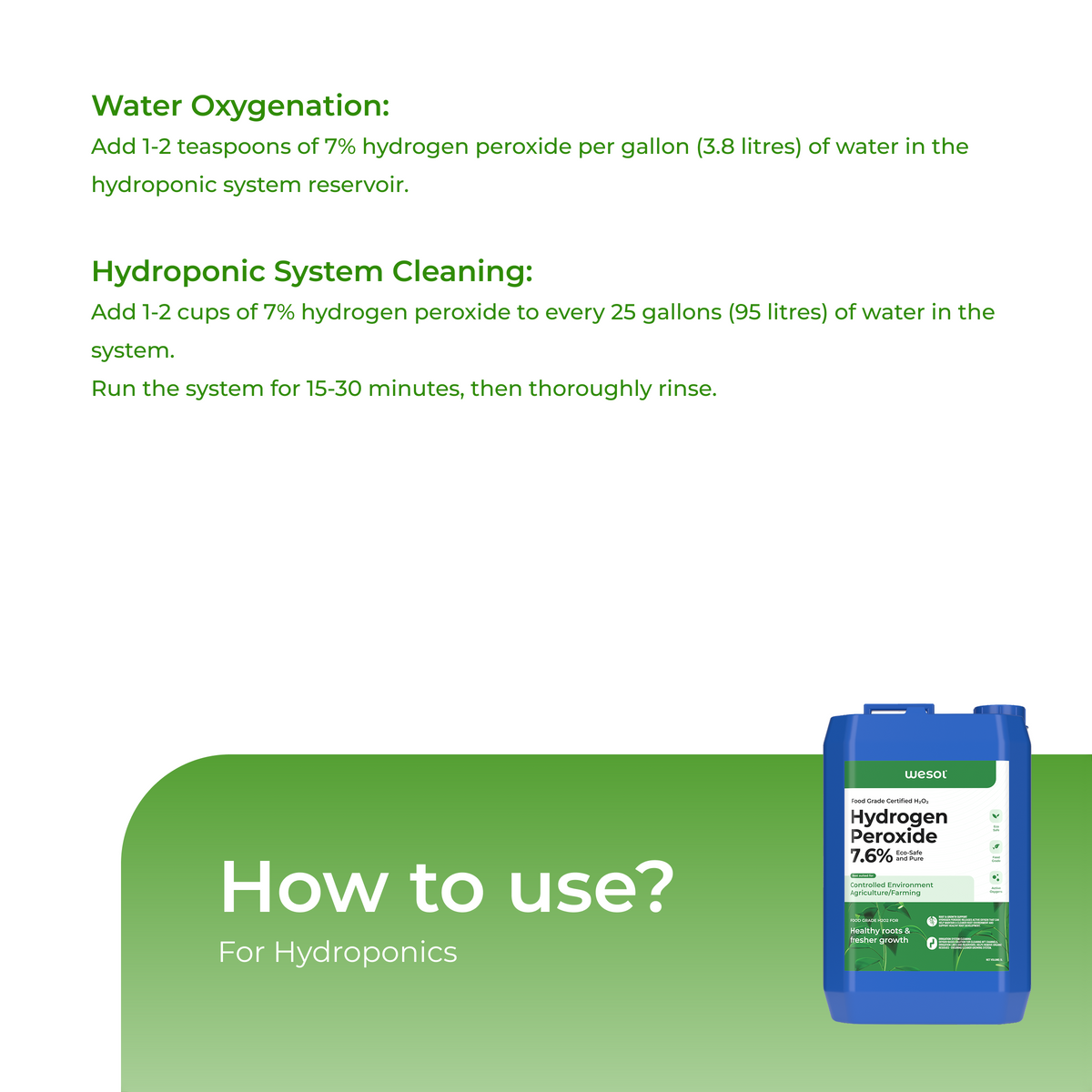
If hydrogen peroxide is being incorporated into the root-care routine, prepare the solution only after calculating the desired final concentration. Never use Wesol Food Grade Hydrogen Peroxide 7.6% directly on plant roots.
Apply Carefully
Apply only the appropriately diluted solution to the affected root-zone area. Controlled application is important because damaged roots can be more vulnerable to additional stress.
Repot the Plant
Move the plant into a clean container with adequate drainage and fresh, appropriate growing medium.
Preparing Wesol Food Grade Hydrogen Peroxide 7.6%
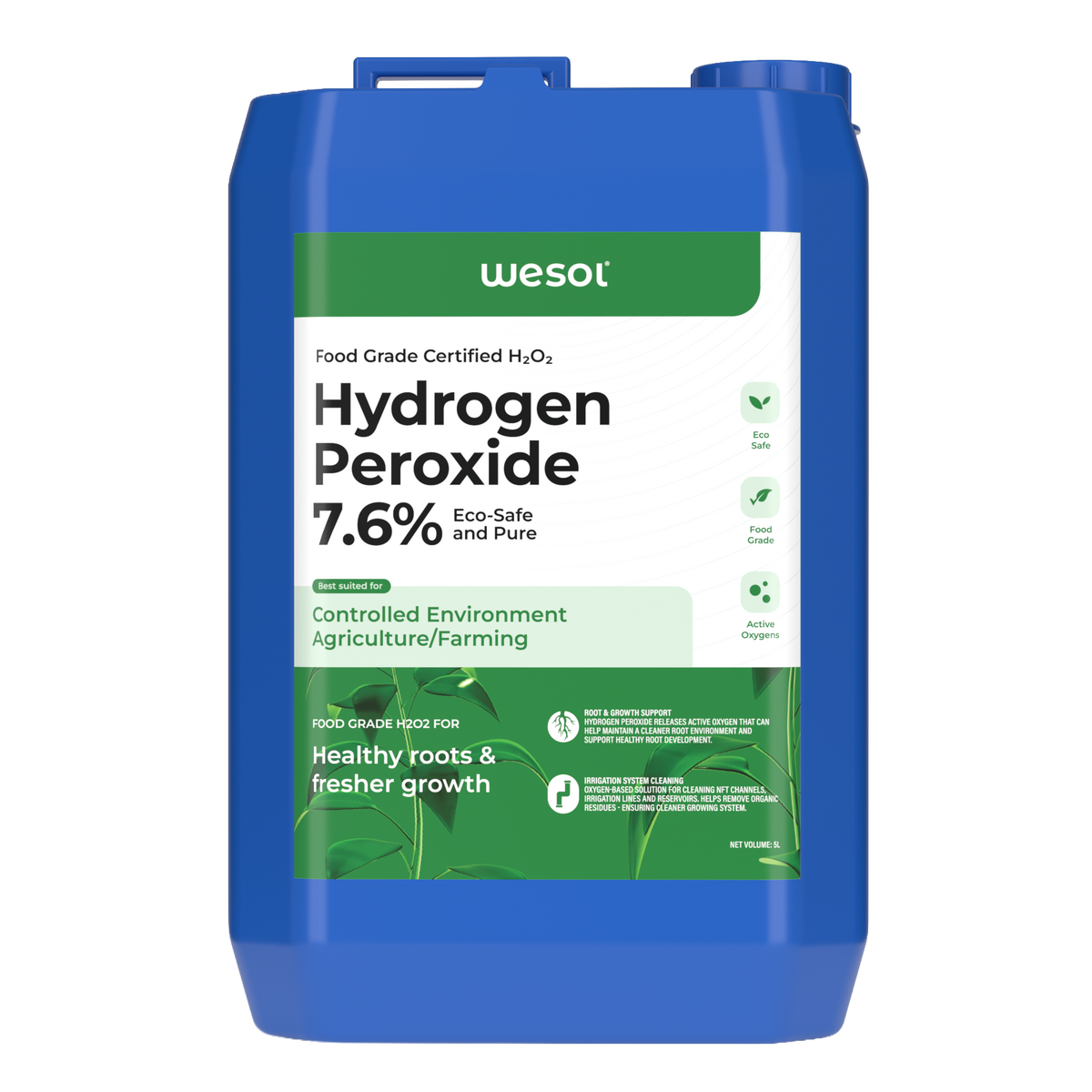
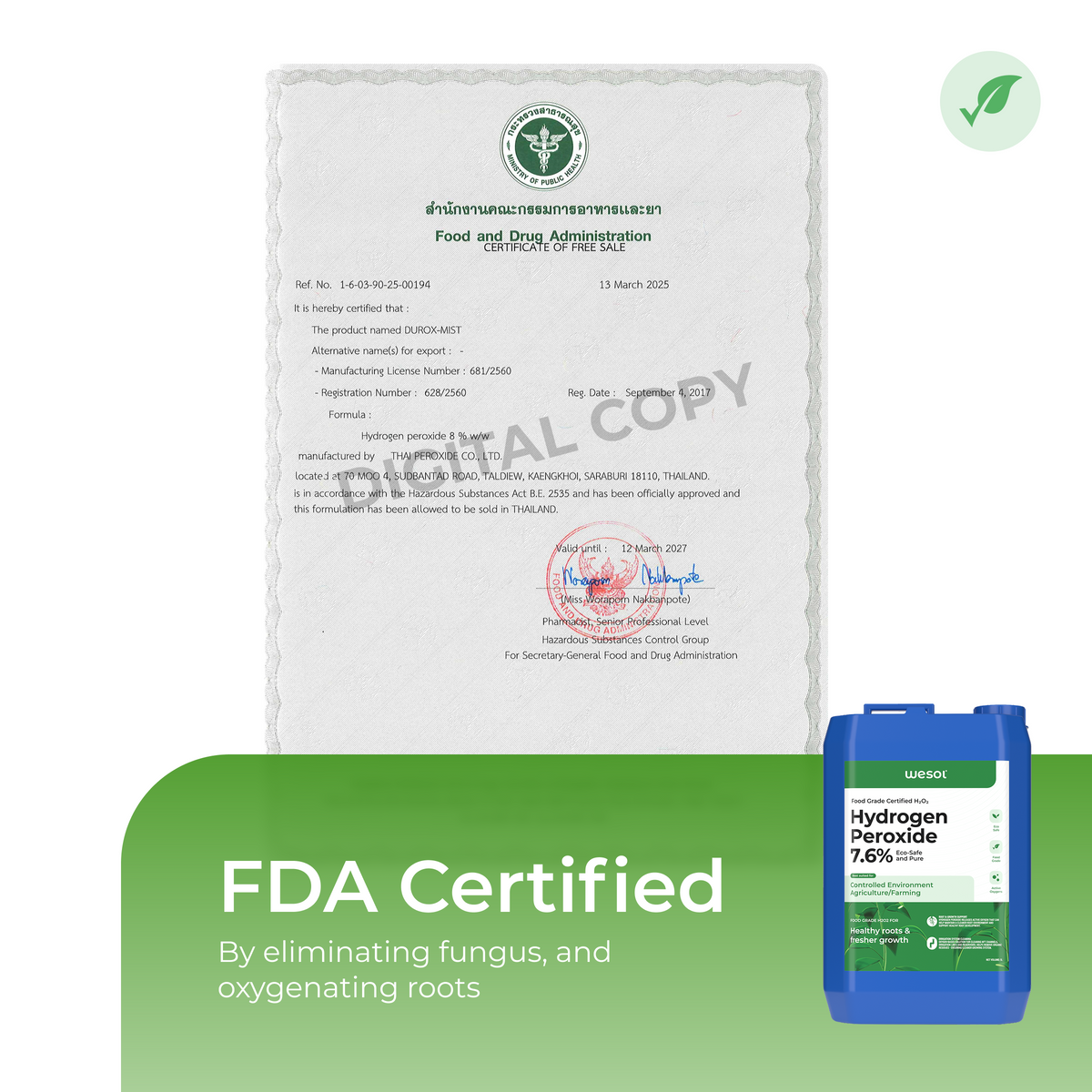
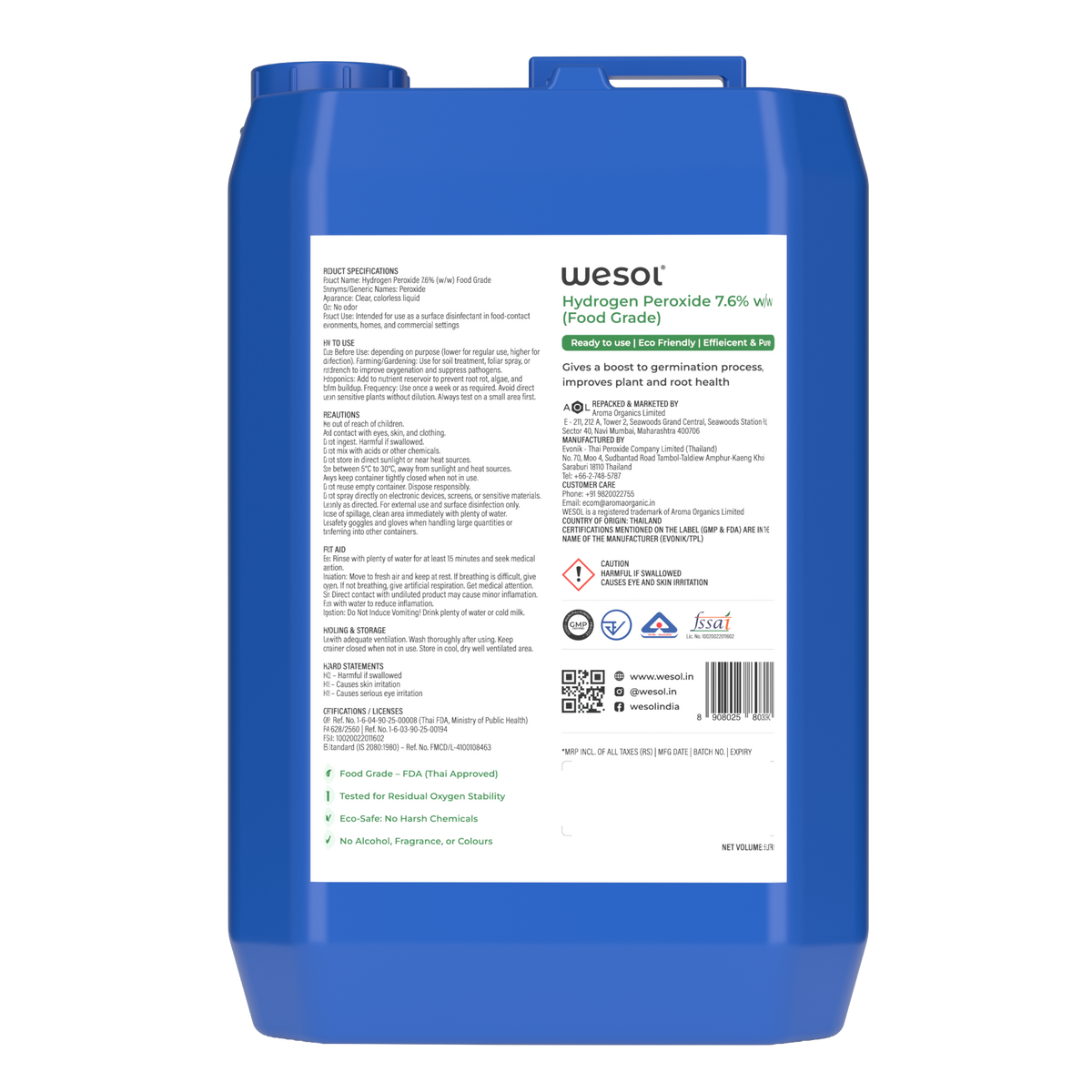
Wesol Food Grade Hydrogen Peroxide 7.6% is a concentrated hydrogen peroxide solution. It must be diluted before it is considered for use around plant roots.
Hydrogen peroxide at this concentration is considerably stronger than the diluted solution used in a plant-care application. Applying it directly can potentially damage living plant tissue.
For a final concentration between 0.25% and 0.5%, the dilution can be calculated using the standard concentration equation:
In this equation, C₁ is the starting concentration, V₁ is the amount of the 7.6% solution required, C₂ is the desired final concentration, and V₂ is the total final volume.
33 mL of Wesol Food Grade Hydrogen Peroxide 7.6% + 967 mL of water for approximately 1 litre of final solution.
66 mL of Wesol Food Grade Hydrogen Peroxide 7.6% + 934 mL of water for approximately 1 litre of final solution.
When plant sensitivity is a concern, the lower 0.25% concentration provides a more conservative starting point. Different plants can respond differently to chemical treatments, so a stronger solution should not automatically be considered better.
Applying the Diluted Solution
Once damaged roots have been removed and the solution has been prepared at the appropriate dilution, the diluted hydrogen peroxide solution can be applied to the affected root-zone area as part of the root-care process.
The aim is controlled application rather than saturating the entire plant or repeatedly exposing the roots to a concentrated solution.
Hydrogen peroxide naturally decomposes into water and oxygen, particularly when it comes into contact with organic material and other substances that accelerate its breakdown. This does not mean that a stronger solution will necessarily provide a better result.
Accurate measurement matters when a concentrated hydrogen peroxide product is being incorporated into plant care. Measure the solution rather than estimating the amount by eye.
Proper dilution allows the intended lower concentration to be applied consistently while reducing unnecessary exposure of living plant tissue to a concentrated chemical solution.
Repotting the Plant
Removing damaged roots is only part of the recovery process. The remaining roots also need a healthier environment in which to recover.
Repot the plant into a clean container with adequate drainage. Excess water should be able to escape instead of remaining around the roots for extended periods.
Use fresh, appropriate growing medium where possible. The medium should provide a suitable balance between moisture retention, drainage, and air movement.
This step matters because treating damaged roots without correcting the surrounding environment does not address the conditions that contributed to the problem.

Why Proper Dilution Matters
Hydrogen peroxide is a reactive compound, and its concentration affects how strongly it interacts with organic material and living tissue.
A stronger solution is not automatically a better solution for plant root care. Excessive concentration can increase the risk of damaging healthy root tissue rather than supporting recovery.
Using a measuring vessel instead of estimating by eye can help maintain consistency when preparing small quantities.
The purpose of dilution is to prepare the intended lower concentration consistently and reduce unnecessary exposure of living plant tissue to concentrated hydrogen peroxide.
Correct the Root-Zone Environment
Root recovery does not depend on hydrogen peroxide alone. In many cases, correcting the conditions that caused the root damage is the most important part of the recovery process.
If overwatering contributed to the problem, adjust the watering routine according to the plant's requirements and the condition of the growing medium.
Check the drainage as well. Water needs to be able to move through the growing medium and escape the container efficiently.
Air movement around the roots is equally important. A well-structured growing medium creates spaces through which both water and oxygen can move.
Create a root environment that is moist when required, but not continuously waterlogged.
Give the Plant Time to Recover
Root recovery does not happen overnight. A plant that has lost a significant portion of its root system may need time to rebuild its ability to absorb water and nutrients.
During recovery, avoid creating additional stress through excessive watering, unnecessary repotting, or aggressive handling of the remaining roots.
New healthy growth can eventually be an encouraging indication that the plant is stabilizing. How quickly a plant recovers depends on its species, the severity of the root damage, environmental conditions, and the amount of healthy root tissue remaining.
Final Takeaway
Root rot is often an environmental problem before it becomes a treatment problem. Excess moisture, poor drainage, compacted growing media, and limited aeration can create conditions in which roots become stressed and vulnerable to decay.
When root rot is suspected, start by inspecting the root system. Remove roots that are clearly dead or severely damaged, preserve healthy tissue wherever possible, and correct the conditions that allowed the problem to develop.
Wesol Food Grade Hydrogen Peroxide 7.6% can be incorporated into a carefully controlled plant-care routine when appropriately diluted. The 7.6% solution should never be applied directly to plant roots. A properly measured 0.25–0.5% final concentration should be prepared before application.
Give your plants a healthier root-zone routine with Wesol Food Grade Hydrogen Peroxide 7.6%.